
Withdrawal Guide
How Betting Tax Works in Kenya (Including Crypto)
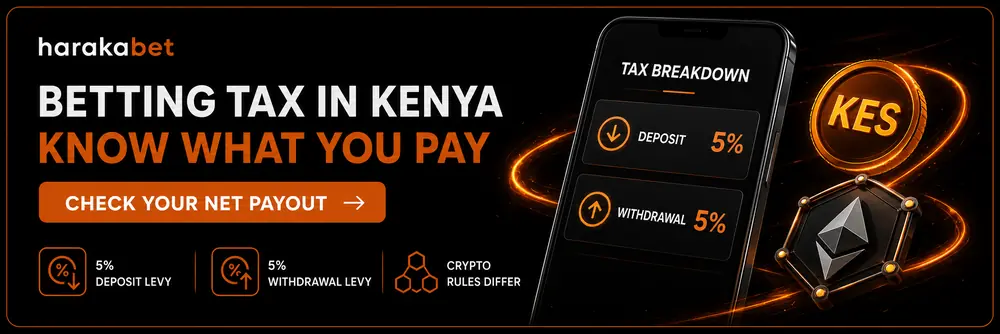
Kenya taxes betting activity at two separate points — deposits and withdrawals — collected automatically by licensed operators. Crypto payouts sit in a legal grey area that’s worth understanding before you choose that method.
Quick Facts
| Withdrawal levy | 5%, deducted automatically before payout |
| Deposit levy | 5%, deducted automatically when you fund your account |
| Who files it | The licensed operator, not the player — no separate return needed for these levies |
| Crypto withdrawals | A different, less settled situation — see the dedicated section below |
Deposit Levy vs Withdrawal Levy
How It’s Collected — No Extra Paperwork for You
Licensed operators in Kenya, including Harakabet, are required to deduct these levies automatically at the point of transaction and remit them to KRA directly. As a player, you don’t file a separate tax return for standard M-Pesa, Airtel Money, bank, or card deposits and withdrawals — the amount you see debited already reflects the levy.
Want to see the exact number before you withdraw? Use the withdrawal calculator to check your net payout for any amount.
What About Crypto Withdrawals?
Crypto sits outside the payment rails the 5% withdrawal levy was built for. A few things make it meaningfully different from an M-Pesa or bank withdrawal:
| It isn’t a mobile-money or bank rail. The standard withdrawal levy mechanism is built around licensed, KES-denominated payout channels regulated directly by Kenyan financial rules — crypto transfers move outside that specific framework. |
| Kenya taxes digital assets separately. Kenya has introduced tax rules that apply specifically to digital asset transactions, independent of the betting-specific levy structure described above. Whether and how these apply to a crypto payout of betting winnings depends on the transaction structure and is not something a general guide can settle for your specific case. |
| Network fees still apply regardless of tax treatment. Any crypto withdrawal will incur blockchain network fees on top of whatever tax obligation applies — these are two separate deductions. |
In short: choosing crypto is not a way to legally avoid Kenya’s betting-related tax obligations, and the actual tax treatment of a crypto payout may differ from the simple 5% figure quoted for KES withdrawals. This is a genuinely unsettled and evolving area — confirm the current rules directly with KRA or a qualified tax advisor before treating crypto as a way to reduce what you owe.
This Is Not Tax Advice
This page explains the general structure of Kenya’s betting-related levies as commonly applied by licensed operators, for informational purposes only. Tax rules in Kenya change through Finance Act amendments, and individual circumstances — especially around crypto assets — can affect what actually applies to you. Harakabet and this guide are not a substitute for professional tax advice; for anything beyond the standard automatic deposit/withdrawal levy, consult KRA directly or a licensed tax professional.
See Your Exact Net Payout
Calculate the standard 5% levy on any withdrawal amount before you submit.
Betting Tax FAQ
Do I need to declare my winnings separately to KRA?
For standard KES deposits and withdrawals, the levy is deducted and remitted by the licensed operator automatically — you generally don’t file a separate return for it. For anything beyond that, consult a tax professional.
Is the 5% levy charged on my winnings or my whole withdrawal amount?
It’s calculated on the full amount you withdraw, not specifically isolated to winnings versus your original deposit.
Does withdrawing in crypto avoid the 5% levy?
Not in the way it might seem. Crypto simply falls under a different, less standardized set of rules — including Kenya’s separate digital asset tax — rather than being exempt from tax obligations altogether. Don’t treat crypto as a way to reduce what you owe without professional advice.
Has this tax rate changed recently?
Kenya’s betting tax structure has changed more than once through Finance Act amendments in recent years. Always check the current rate directly with KRA if precision matters for your situation.
Where can I get an official answer about my specific tax situation?
KRA’s official channels or a licensed Kenyan tax professional are the right source for anything beyond the standard automatic levy described here.
Explore more: Withdrawals · Fee Calculator · Withdrawal Times · Status Explained